
By Dave Kramer, Director of Green Programs & Partnerships at Boston Green Academy with support and inspiration from Chris Donnelly, Jessie Zeng, and Jen Doyle.
To accompany People, Parks, and Possibilities - A Public Spaces Environmental Problem-Solving Toolkit
A parcel of land can look pretty simple on a map. But spend a little time there, ask a few questions, and things get more interesting. Who uses it? Who has trouble getting there? Who gets to help decide what happens next?
These are the kinds of questions we want our students at Boston Green Academy (BGA) to keep asking. They connect what students know about their city with what they are learning about climate, design, and public participation. They also give us plenty to chew on as we consider how a public-spaces environmental problem-solving toolkit might deepen work already underway at BGA.
A design firm with a very green assignment
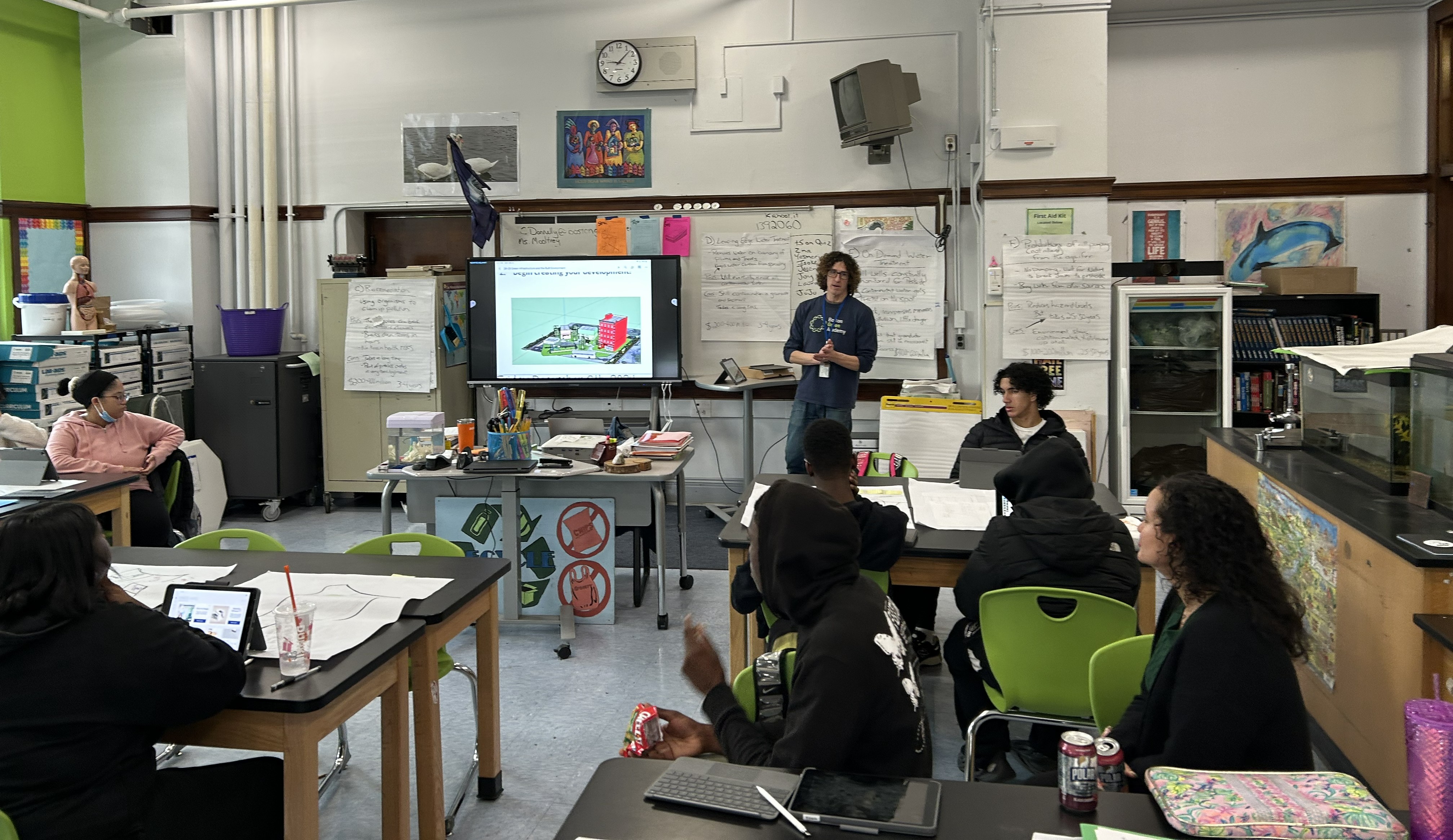
In our Environmental Science and Technology Career and Technical Education (CTE) pathway, led by teacher Chris Donnelly, 11th-graders collaborate in small design firms or public design agency teams. Their challenge is to explore how cities can grow in smarter, greener, and fairer ways.
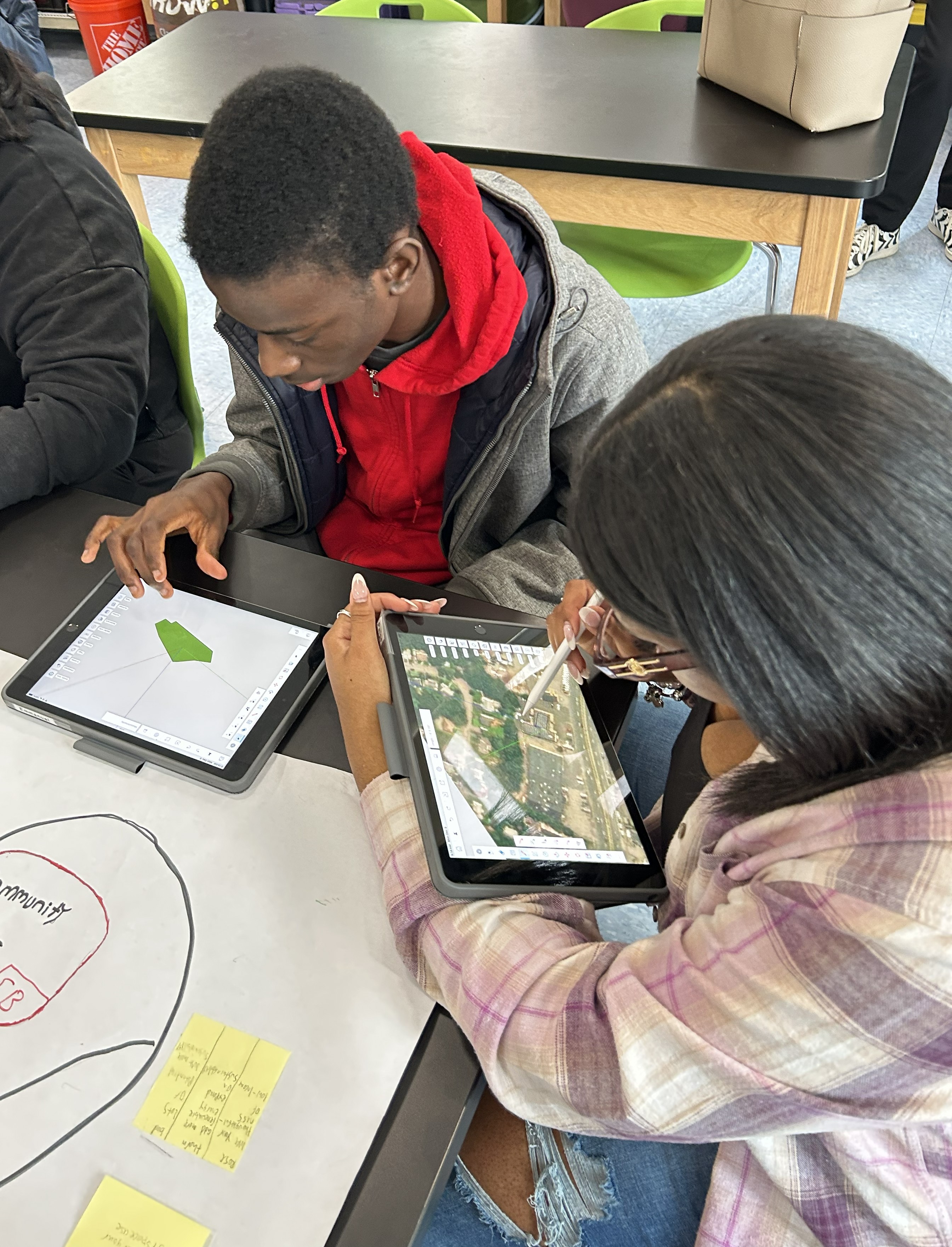
Students use GIS, or geographic information systems, to identify parcels for redesign. GIS helps organize information about places so that patterns and relationships become easier to investigate. With SketchUp, students develop three-dimensional designs, while ArcGIS StoryMaps helps them bring maps and their ideas together into a story others can explore. Their work culminates in a digital portfolio showing their critical thinking, creativity, and technical skills.
The questions driving those designs involve walkability, public transit, green space, local food systems and sustainable building techniques. Students consider how design choices affect climate, health, equity, and community. The pathway also draws onEcoRise curriculum and connecting work on the built environment with green infrastructure and building design.
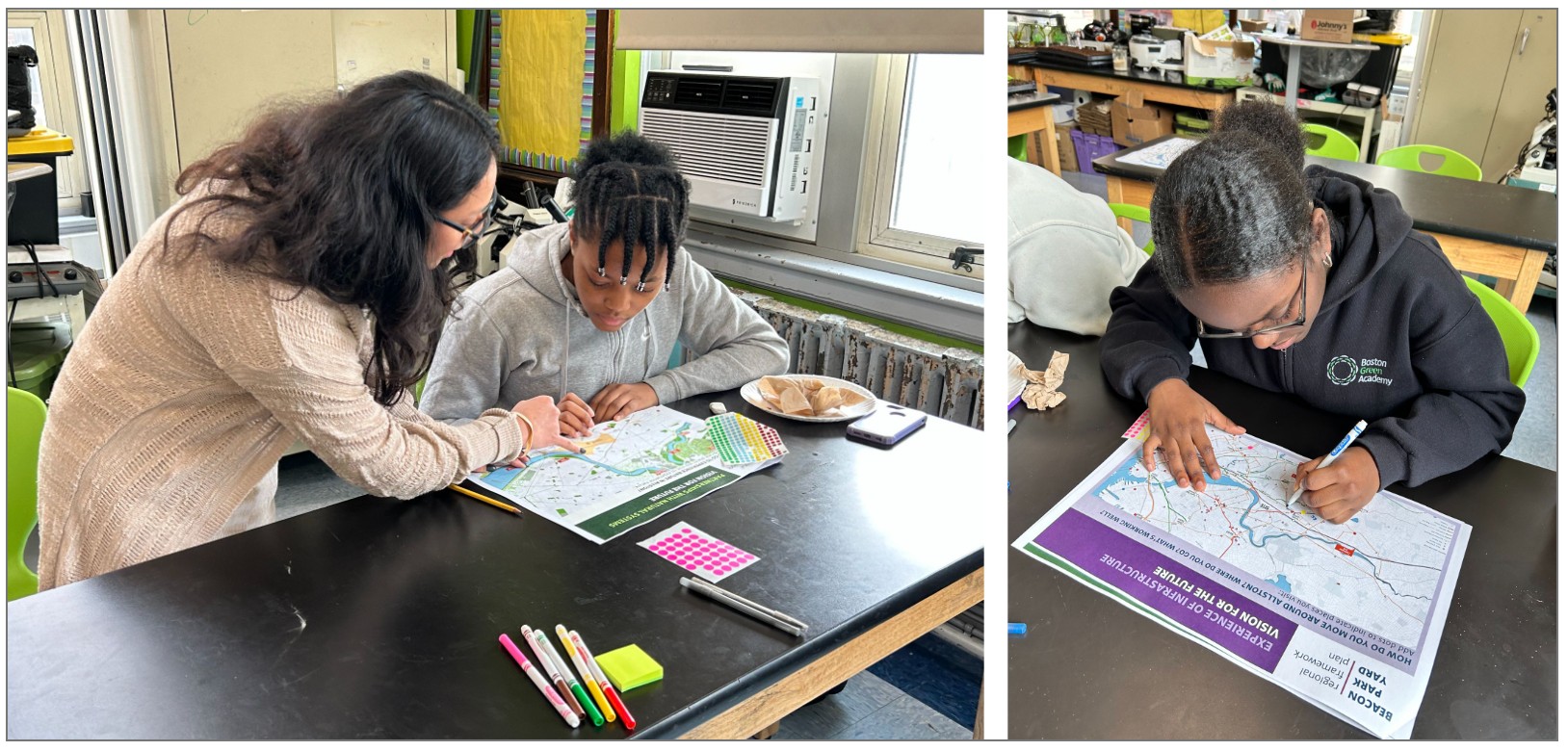
We are especially interested in what happens when students have to explain why a design makes sense for a particular place and the people connected to it. That takes research, judgment, and a willingness to reconsider an idea that may have seemed perfect only five minutes before.
That’s not the beginning of the conversation, though–that happens when our students start with us in middle school. Our very green librarian, Jessie Zeng, works with eighth-graders to prepare them for the challenges ahead. Student teams have had the opportunity to work on a community green space design proposal that must meet a number of criteria; they then present their ideas to staff and older students at BGA who act as a panel of esteemed City Councilors during the presentations, score their work on a rubric, and give immediate feedback. This gives students the opportunity to make that connection between middle school curiosity and high school technical work more intentional, and by the time the eighth graders reach 11th grade, they will have had much more experience with sustainable urban design and community-driven, participatory planning!
A closer look before the redesign
The toolkit provides a shared sequence for this work, with community knowledge informing the process from the beginning.
Sensing the Space would ask students to spend time in a place, observe it closely, investigate its history, and listen to people’s stories. A map becomes more meaningful when you have an actual question to bring back to it.
Auditing Equity and Comfort would help teams examine access, shade, seating, rules, and environmental burdens. It would also push us to ask who is missing from our conversations, including people who would like to use a space but cannot comfortably get there or stay there.
Imagining Alternatives would connect that evidence to the design work. Students could compare options, investigate materials and green infrastructure, and invite people connected to the space to challenge their assumptions. What does this design make easier? What might it make harder, and for whom?
Proposing the Change would bring the model, maps, community input, and reasoning together in a proposal with a specific request. Students would need to think about costs, maintenance, and who has the authority to act, then use feedback to revise their work.
The more opportunities there are for students to return to the same place also means the more opportunities to examine their own earlier thinking; each visit, conversation, or design review could reveal something they had missed. Learning to change your mind for a good reason is a skill worth practicing.
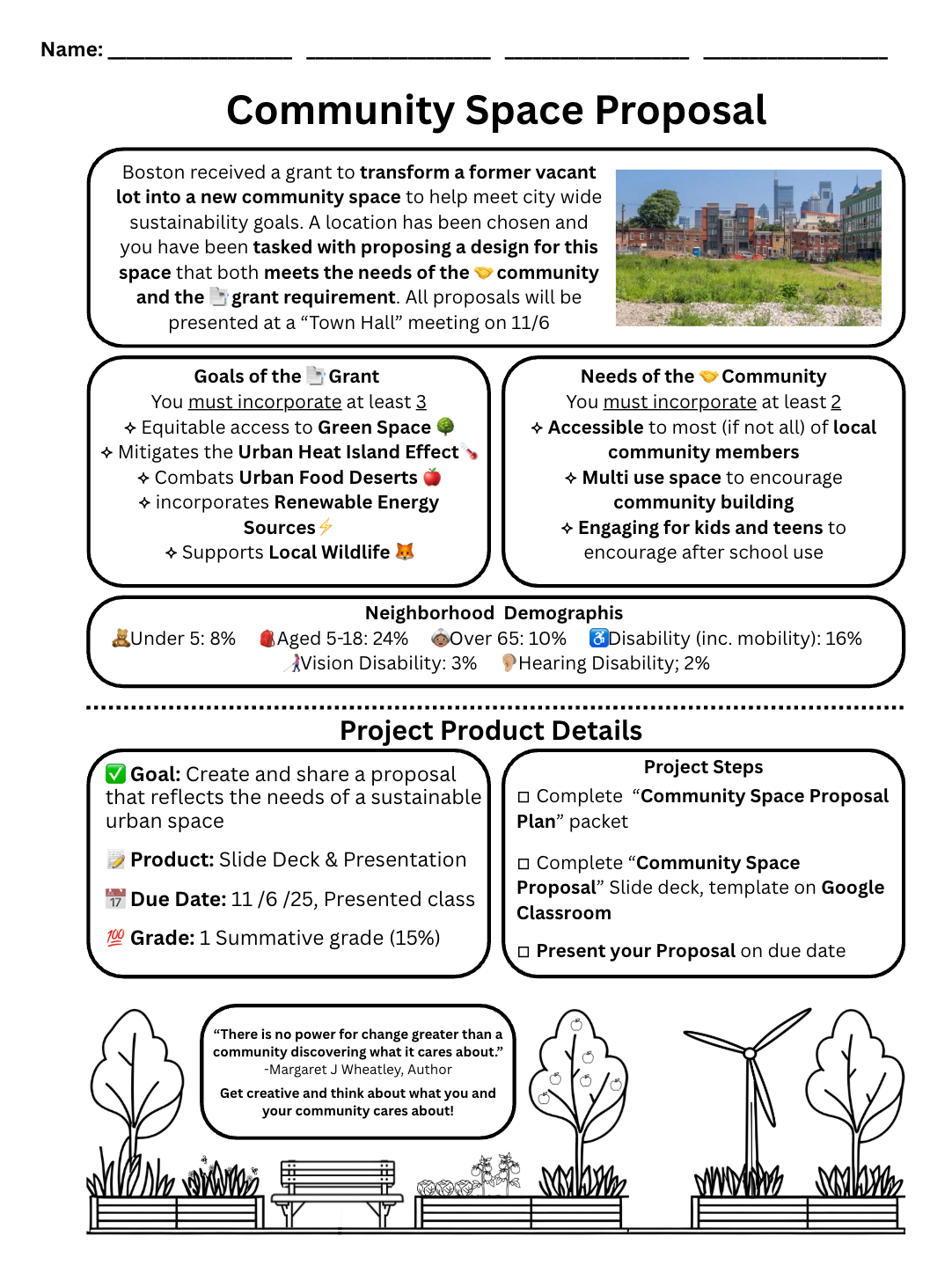
Instructions for students working to create a proposal for improving a public greenspace. See a complete materials packet from BGA.
Bringing the community into the design
A public-space project gives us a chance to examine what public participation actually means. Asking someone to react to a finished design gives them a different role from inviting them to help define the problem in the first place.
With the toolkit, we could build more opportunities for residents, space users, maintenance staff, and planning or design partners to influence students’ questions and proposals. We would also need to make room for disagreement. A space can mean different things to different people, and a proposal needs to take those differences seriously.
Our Green Exhibitions have already taken BGA students to Boston City Hall to present proposals for change. That gives us something concrete to build on: students bringing their work into a civic setting, where their ideas can reach people involved in decisions about the city. They even get to visit the City Planning Department and see the impressive Model Room, a 1:40 inch scale model of Boston's downtown and other central areas of the city maintained by the City of Boston’s Urban Design Division’s Design team. Importantly, it does not include Brighton, where BGA is currently located, and it leaves out most of the neighborhoods where the vast majority of BGA students live. This lack of inclusion and tale of two cities continues to be one of the most challenging aspects of a city still reckoning with a racially divisive past and, of course, ongoing challenges and growth as a multicultural beacon for innovation, but for whom? Our students ask these tough questions and dive in headfirst.
The People, Parks, and Power Public Spaces Environmental Problem-Solving Toolkit could help us strengthen what happens around our Green Exhibitions explorations and presentations, including returning findings to contributors, documenting feedback, and identifying feasible next steps for actionable change. A presentation can be just the first step, not an ending to move on quickly to the next project or unit, but a throughline, part of BGA’s Green Line. It can open a conversation that continues after exhibition day.
More ways into the big green work
Looking ahead, we are excited about the possibility of using National Geographic and Esri’s MapMaker to give younger students an earlier taste of spatial thinking. Exploring map layers and looking for patterns could help them begin connecting familiar places with questions they might later investigate in CTE.
We also see room to deepen the 11th- and 12th-grade work through virtual reality, alongside GIS mapping and site-suitability analysis. Partnerships with area practitioners such as Haley & Aldrich, Turner Construction and the Sasaki Foundation expose students to real-world examples through site visits, industry specific career fairs, career panels, and industry professionals coming directly into the classroom to connect with students one-on-one and in small groups. Being able to experience and critique a proposed space in another way could generate useful questions about scale, movement, and who the design serves. These are possibilities we want to explore.
Ultimately, we want our students to grow as environmental problem solvers who can investigate a place, learn with other people, make a reasoned proposal, and stay involved as the idea develops. The tools help them see possibilities. Working with the community can help them understand what those possibilities would mean.
There is a lot of learning packed into a parcel of land and we love watching where our students run with it. With young, passionate changemakers, you never know what amazing ideas they’ll come up with and how bright their light will shine on the communities they call home.